


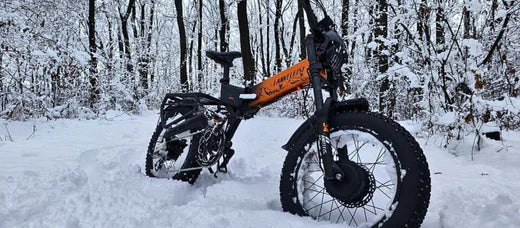
As temperatures drop across the EU and winter sets in, the weather – especially in December – becomes colder and wetter. Low temperatures, snowfall, and frost often prevent riders from using their e-bikes, leaving them unused for extended periods. Improper storage can significantly impact battery performance and lifespan. Therefore, correct storage and regular maintenance are crucial.
Lankeleisi 's technical team provides practical recommendations on how to properly store your e-bike and effectively protect the battery during extended periods of non-use in the cold season.
Why do temperature changes affect battery performance?
Lankeleisi e-bikes use lithium batteries. With the onset of winter, the electrolyte in the battery becomes more viscous, reducing the activity of the chemical substances inside. The electrochemical reactions slow down, the internal resistance increases, and the available battery capacity decreases significantly. When the temperature drops to 0 °C, the battery capacity is only about 60% of its capacity at summer temperatures.
The lower the temperature, the lower the usable battery capacity. When driving in winter, low temperatures also negatively impact charging efficiency. Lankeleisi therefore recommends not fully discharging the battery before charging it at low temperatures, as this can lead to the battery not charging correctly.
Ideally, the battery should be charged indoors at a temperature of 20–25 °C to ensure optimal charging performance.
If you do not use your e-bike for an extended period during the winter, Lankeleisi strongly recommends taking specific measures to protect the battery.
How do you store an e-bike that will not be used for an extended period of time?
The storage location of your e-bike is crucial, both in winter and year-round. A suitable storage environment protects the battery from damage and extends the lifespan of the entire e-bike.
Our technicians recommend storing the e-bike in a dry, well-ventilated environment , avoiding direct sunlight, and keeping the battery at a temperature of 20–25 °C . This prevents the battery from entering a cold-weather protection mode, which can impair proper charging.
Avoid direct sunlight:
Neither the battery nor the frame of the e-bike is designed to be exposed to direct sunlight for extended periods. High temperatures accelerate battery aging and can even lead to overheating, impairing performance and safety.
Avoid humid environments:
Moisture can cause short circuits and damage electrical components. Therefore, always store your e-bike in a dry and well-ventilated place.
Important NOTE:
If you live in a very cold region, make sure your e-bike is not exposed to extremely low temperatures during storage. Although most e-bike batteries are cold-resistant, extreme temperatures can permanently impair battery performance. Storage at 20–25 °C is ideal.
How do you protect the battery during extended periods of non-use?
1. Charge the battery once a week
Winter is the time of year when e-bike batteries are under the most strain. If you are storing your e-bike for about three months, the battery should be charged at least once a week . This keeps the battery active and prevents aging due to prolonged inactivity. Charge the battery to approximately 70% each time.
2. Regularly discharge the battery
Even if the device is not used for extended periods, the battery should be slightly discharged regularly – ideally once a week. This keeps the battery's chemical components active and extends its lifespan.
A simple method is to put the bike on its stand so the rear wheel can spin freely. Turn on the display and engage the throttle to consume energy. Be careful not to completely discharge the battery, as deep discharge can prevent it from recharging.
Maintain the correct charge level
Maintaining a charge level between 40% and 60% , combined with regular charging and discharging, helps to avoid overcharging and deep discharging and to reduce the negative impact of low temperatures. At the same time, the battery remains active, which significantly increases its lifespan and stability.
Check the battery regularly.
Regular visual and functional checks of the battery are crucial for safety and performance. Look for external damage, swelling, loose connections, charging problems, or possible leaks.
Should any irregularities occur, please contact Lankeleisi customer service immediately. Our technicians will provide you with professional solutions and help you avoid security risks and usage restrictions.
Conclusion
In winter, an e-bike battery is particularly susceptible to low temperatures and long periods of inactivity, which can lead to reduced performance and premature aging. To effectively protect the battery, it is recommended to store it in a dry, warm environment at 20–25 °C , combined with regular charging and discharging.
Weekly maintenance, an optimal charge level of 40–60% and regular checks ensure that the battery of your Lankeleisi e-bike survives the winter without any problems and offers full power again in the spring for new riding adventures.



Leave a comment
All comments are moderated before being published.
This site is protected by hCaptcha and the hCaptcha Privacy Policy and Terms of Service apply.