


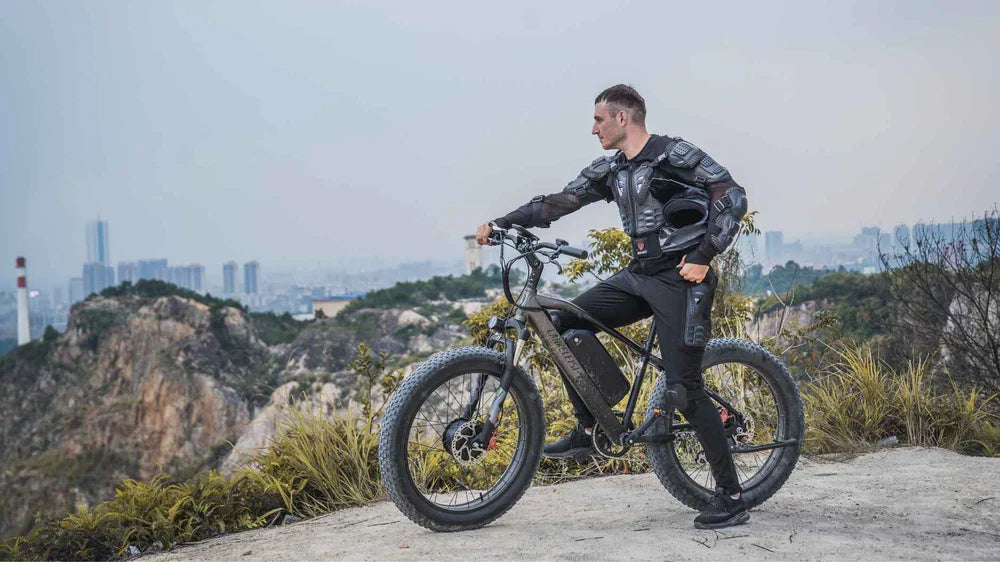
Not sure which mountain bike suits your riding style or the terrain you're traveling on? With so many options – hardtail, full suspension, e-bike, fat bike – it's easy to feel overwhelmed.
This guide will help you choose the best mountain bike based on how and where you ride. From trail beginners to experienced enduro riders, we explain the key features and recommend high-performance LANKELEISI models for every adventure.
Understand your driving style
Before choosing a mountain bike, it's important to understand how you ride. Your riding style influences everything – from frame geometry and suspension travel to tire size and... Engine edition .
A bicycle that excels on fast cross-country trails may not handle steep descents or technical slopes effectively.
Adapting the bicycle to your riding style ensures better performance, comfort and control.
Relaxed trail riding
If you enjoy relaxed weekend rides on smooth trails, forest paths, or gravel roads, you're probably a casual trail rider. Comfort, stability, and easy handling are your priorities, not aggressive performance.
Things to look out for: Hardtail bikes with suspension, moderate tire width, and an upright geometry for a comfortable riding position. A lightweight e-MTB can also be a good option for longer tours or gentle climbs.
Trail riding
Cross-country riding is about covering long distances efficiently, often with a mix of climbs, descents, and fast trail flow. Riders who value speed, endurance, and agility fall into this category.
Things to look for: lightweight frames, efficient drivetrains (typically 1x), fast-rolling 29-inch wheels, and front suspension with short to medium travel (100–120 mm). You need a bike that's agile uphill and fast on flat terrain.
All-Mountain / Enduro Riding
Enduro riders love challenging terrain, steep descents, and technical switchbacks – often combined with long climbs to the summit. These riders need a bike that is both robust and responsive.
What you should look for: Full-suspension frames with longer travel (140–170 mm), aggressive geometry (slack head angle), wide handlebars and dropper seatposts for better control on descents.
Downhill (DH) riding
Downhill riding is all about speed and control on steep, technical descents. Riders in this category often ride in bike parks or on mountain trails with shuttle support. The terrain includes jumps, drops, rock gardens, and sharp turns.
Things to look for: maximum suspension travel (180–200 mm), robust frames, powerful hydraulic disc brakes and a loose geometry for stability at high speeds.
Freeride
Freeride riders value tricks, stunts, jumps, and style. Their bikes must be robust and agile to handle hard landings and sudden changes of direction.
Things to look for: Sturdy, compact frames with medium to long travel suspension, wide tires for stability, and reliable brakes. Fat tire e-bikes They are frequently used here due to their shock-absorbing properties and improved grip.

Identify your terrain type
Choosing the right mountain bike starts with considering where you'll be riding most often. The terrain has a significant impact on the bike's performance, comfort, and durability.
A bicycle that performs well on smooth forest paths may have problems on rocky descents or in snow.
Therefore, it is important that the design, tires, suspension and engine power of your bicycle are matched to the type of terrain you intend to tackle.
flat or hilly paths
Do you mainly ride on well-maintained paths, forest tracks or gravel roads? Then you need a light, efficient bike for flat or hilly trails that can also handle level surfaces with ease.
Hardtail mountain bikes or lightweight e-MTBs with minimal suspension are perfect for this. Large 29-inch wheels help maintain momentum, and narrower tires offer lower rolling resistance.
Tip: Riders who value speed and endurance on flatter terrain should look for XC bikes or e-MTBs with medium power, a streamlined frame and moderate tire width.
Rocky or technical terrain
Rock gardens, root-covered paths and uneven terrain require more than just balance – they require stability and precision.
On these challenging trails, full-suspension bikes with wide tires and powerful hydraulic brakes are essential. The additional shock absorption ensures control and reduces rider fatigue.
Best choice: Look for bikes with suspension offering more travel, dropper seatposts, and wide or medium-width tires for better grip and control.
Steep ascents and descents
If you are riding in mountainous areas with frequent changes in altitude, your bicycle must be capable of performing well both uphill and downhill.
Steep climbs require a wide gear range and strong motor support, while descents require safe handling and robust suspension.
Ideal setup: A trail or enduro bike with balanced geometry, a mid-drive motor (for constant power output) and powerful disc brakes will help you climb efficiently and descend safely.
Muddy or wet conditions
Are you riding through forests or generally damp areas after a rain shower? Muddy trails can be tricky, especially if your tires lack grip. In wet terrain, traction is everything.
Aggressive tread patterns, wider tires and sealed components protect your bike while providing stability on slippery surfaces.
Recommendation: Tubeless-ready tires with lower pressure and fender To minimize splashing, these are strongly recommended when driving in mud.

snow or sand
Extreme conditions require special equipment. Riding on snow or sand demands extra buoyancy to prevent sinking. This is where fat bikes truly shine.
With oversized tires and low-pressure air chambers, they distribute the weight evenly and glide over soft surfaces.
Why it's important: If you want to ride all year round – including on winter roads or beach paths – a thick tire is essential. electric bicycle offers unsurpassed stability and traction.
By accurately identifying the terrain you ride on most often, you can avoid buying the wrong type of bicycle and instead invest in a bicycle that offers safety, performance, and long-term satisfaction.
Choose the right type of bicycle
Choosing the right type of mountain bike is crucial to ensuring your riding experience meets your expectations. The type of bike you choose directly impacts your comfort, performance, and safety on the trail.
Whether you're climbing hills, riding down rocky paths, or riding through snow and sand, there's a specific bike configuration for every purpose.
Hardtail vs. Full Suspension
Hardtail mountain bikes have a suspension fork at the front but a rigid rear frame. This design is lightweight, mechanically simple, and generally less expensive. Hardtails are highly efficient when pedaling on smooth surfaces, making them ideal for cross-country riding or beginner trails. They also require less maintenance, which is especially beneficial for riders who value simplicity.
In contrast, full-suspension bicycles are equipped with both front and rear suspension. This additional damping significantly improves traction, shock absorption, and control, especially on technical terrain, rocky descents, or steep singletrack trails. While full-suspension bicycles tend to be heavier and more expensive, they offer a more forgiving and versatile ride, particularly for advanced riders.
When deciding between the two, consider the type of terrain you ride on most often and whether comfort or climbing efficiency is your top priority.
Electric mountain bikes
E-mountain bikes are becoming increasingly popular with all types of riders. Thanks to integrated motors that assist pedaling, e-MTBs allow you to effortlessly tackle steep hills, long distances, and challenging terrain.
There are some important features you should consider:
- The motor power determines how much support you receive, especially on inclines.
- Battery: The capacity affects how far you can drive on a single charge.
- Pedal assist systems can be based on torque or cadence and affect how smoothly the motor responds to your effort.
- Weight and frame design play a role in the handling of the bicycle, especially on descents.
E-MTBs are ideal for riders who want to extend their range, explore more challenging trails, or simply enjoy longer days in the saddle without overexertion. They also make mountain biking accessible to a wider range of fitness levels and age groups.
Fat Bikes
Fat bikes are equipped with oversized tires – usually 4 cm wide or more – which allow them to glide over soft, unstable surfaces such as snow, sand, or mud. These tires offer exceptional grip and stability, especially in conditions where conventional mountain bike tires would sink in or slip.
Besides their traction advantages, fat bikes naturally absorb vibrations on the trail thanks to their large air volume, resulting in a surprisingly smooth ride. Although they are generally heavier and slower on dry, hard surfaces, they are excellent for year-round riding, especially in winter or in remote areas.
Fat bikes are a solid option for adventurous riders who value stability and versatility more than speed.
Key components that affect performance
The performance of a mountain bike is determined not only by its type or design, but also by the components used. Every part – from the frame material to the braking system – plays a crucial role in the bike's handling, comfort, and reliability on the trail.
If you know what to look for, you can choose a bicycle that suits your skill level, the terrain, and your riding goals.
Frame material
The frame of your bicycle is its foundation. The material it's made of affects everything from weight and durability to price and riding feel.
- Aluminum: Lightweight, affordable, and corrosion-resistant. Ideal for most drivers.
- Carbon fiber: Even lighter and stiffer than aluminum. Excellent for performance and speed, but more expensive.
- Steel: Robust and comfortable with good vibration damping, but heavier.
- Titanium: Combines strength, light weight and comfort, but is usually only used for high-end custom designs.
suspension
The suspension compensates for uneven terrain, absorbs shocks and improves control.
- Front suspension (hardtail): A good choice for less technical trails.
- Full suspension: Provides front and rear shock absorption for better traction and comfort on challenging terrain.
- Suspension travel: The range of movement of the suspension, measured in millimeters (e.g., 100 mm–180 mm). More suspension travel = better for uneven, steep, or downhill terrain.
- Air suspension vs. conventional suspension: Air suspension is lighter and easier to adjust. Conventional suspension offers a smoother response for heavier or more aggressive riders.
brakes
Reliable braking is essential for control and safety, especially on steep or technical trails.
- Hydraulic disc brakes offer excellent braking power and modulation. They function in all weather conditions.
- Mechanical disc brakes: Cheaper, but require more hand force and need frequent adjustment.
- Rotor size: Larger rotors provide better braking performance for downhill or e-MTB riding.
Tire industry
The tires represent the direct contact of your bicycle with the ground and are therefore an important performance factor.
- Width: Wider tires offer better traction and comfort, especially on loose or uneven terrain.
- Tread pattern: Aggressive studs improve grip in mud or on stones; smoother profiles roll faster on hard surfaces.
- Tubeless compatibility: Tubeless tires can be ridden at lower pressure, thus offering better grip and fewer punctures.
The best electric mountain bikes in LANKELEISI
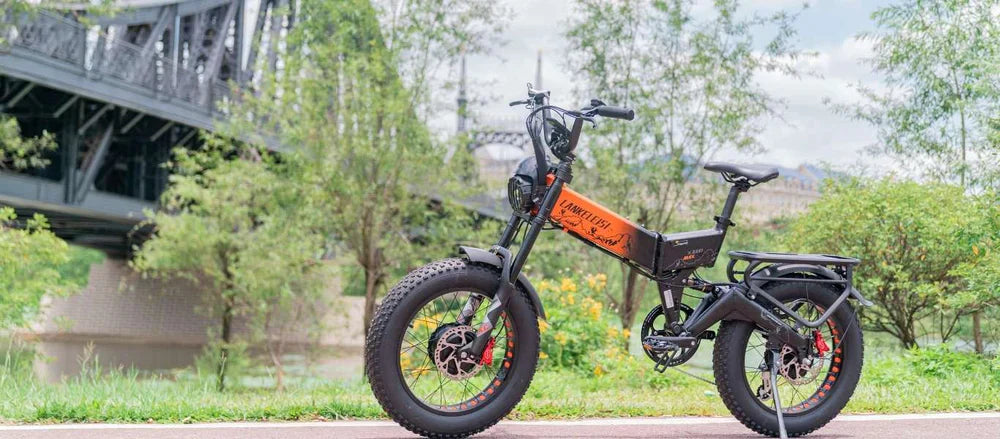
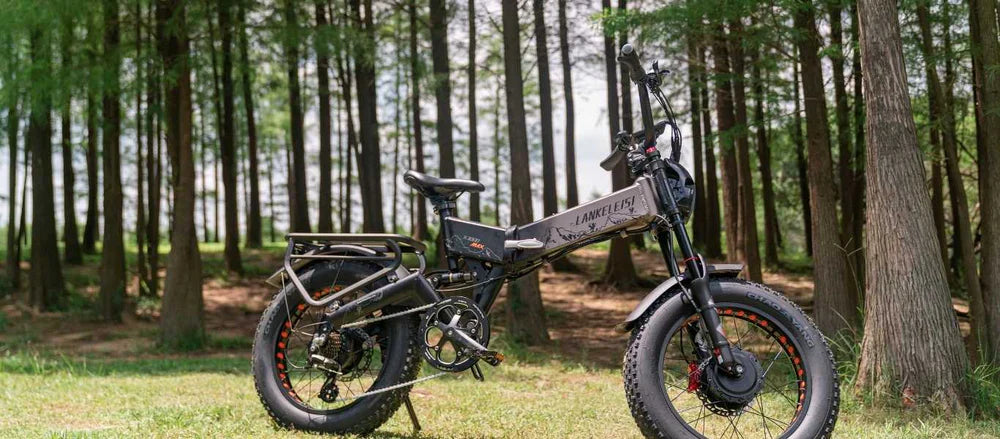
When it comes to high-performance electric mountain bikes, LANKELEISI stands out with models specifically designed for off-road exploration.
These bicycles are known for their performance, range and robust build quality, and are ideal for riders who demand high performance on challenging terrain.
MG800Max – Built for extreme terrain
The 10th and 11th. LANKELEISI MG800Max It's a powerhouse with a dual motor, tailor-made for ambitious off-road riders. With a total output of 2000 W, it effortlessly tackles steep 40° slopes and rough trails.
Its four-bar suspension system, 26 x 4.0 inch tires and 120 mm travel front fork provide excellent shock absorption, while the 48 V 20 Ah Samsung battery offers an assisted range of up to 130 km.
Features such as hydraulic brakes, Shimano 7-speed gearbox and a bright LED headlight make it a complete off-road machine.

MG740Plus – Versatility with two engines
Perfect for anyone who needs strength and endurance, who MG740Plus combines 1000W motors at the front and rear for outstanding climbing performance and acceleration.
Its full suspension and 26 x 4.0 inch tires ensure a smooth ride over stony paths and sand.
Samsung's 960 Wh battery offers a range of up to 150 km, while hydraulic disc brakes and an ergonomic design ensure safety and comfort.

RV700 – Off-Road Explorer
The 10th and 11th. LANKELEISI RV700 It features a 1000W rear-wheel motor and full suspension, making it an excellent choice for riders who want comfort without sacrificing performance.
With a 768 Wh battery and a range of up to 120 km, it's ideal for longer off-road adventures. The robust 26×4.0-inch tires, Shimano 7-speed gears, and hydraulic brakes ensure you maintain control on any terrain.
Each of these models is designed for demanding trail performance. Whether climbing and descending mountains or cruising through snow and sand – LANKELEISI offers reliable, high-performance solutions for true off-road riding.

Conclusion
Choosing the right e-mountain bike for off-road riding isn't just about speed – it's also about control, durability, and safety on every trail. Understanding the key features and what really matters for off-road performance will get you ready to ride further, climb higher, and explore limitless terrain.


Leave a comment
All comments are moderated before being published.
This site is protected by hCaptcha and the hCaptcha Privacy Policy and Terms of Service apply.